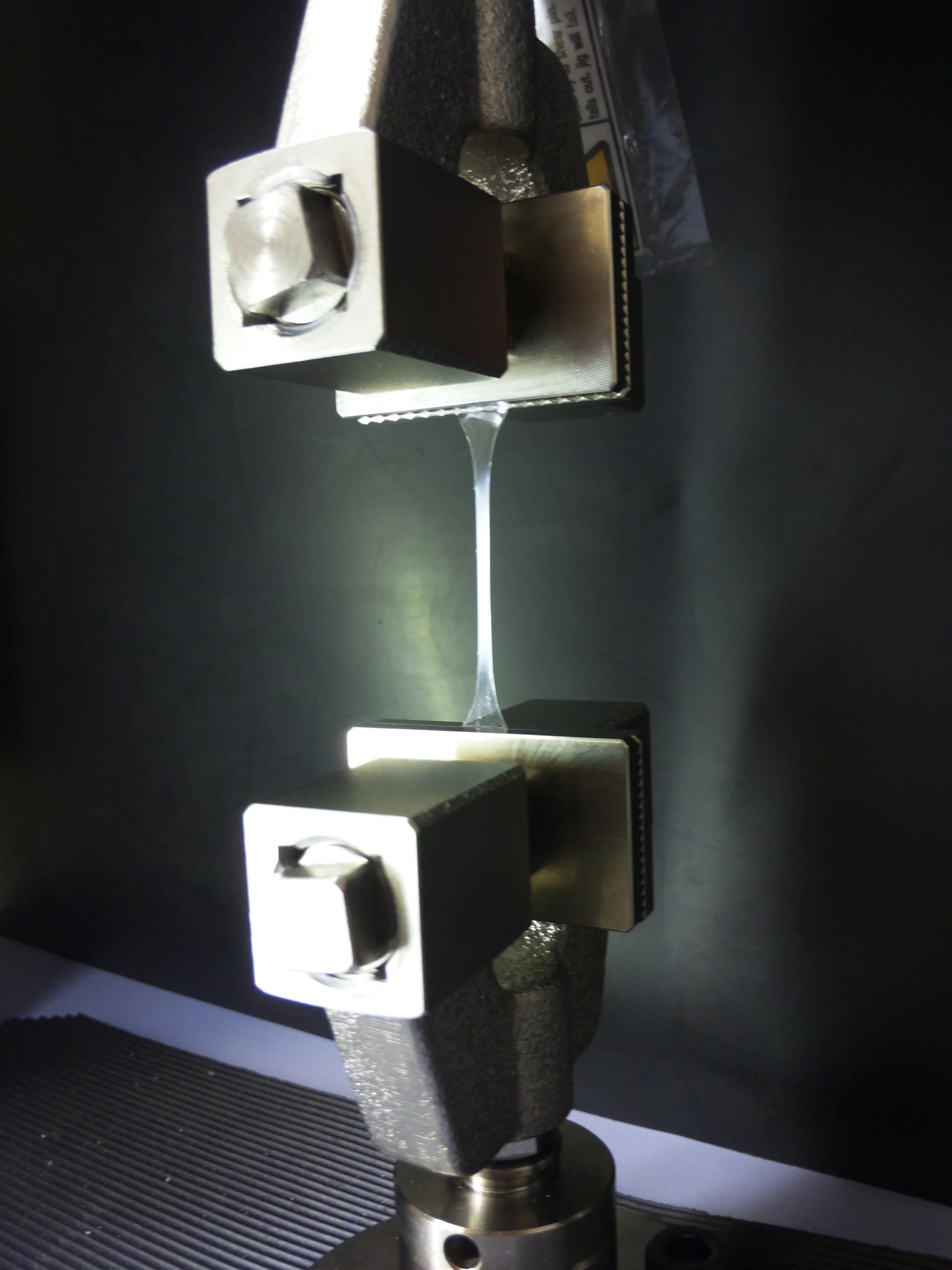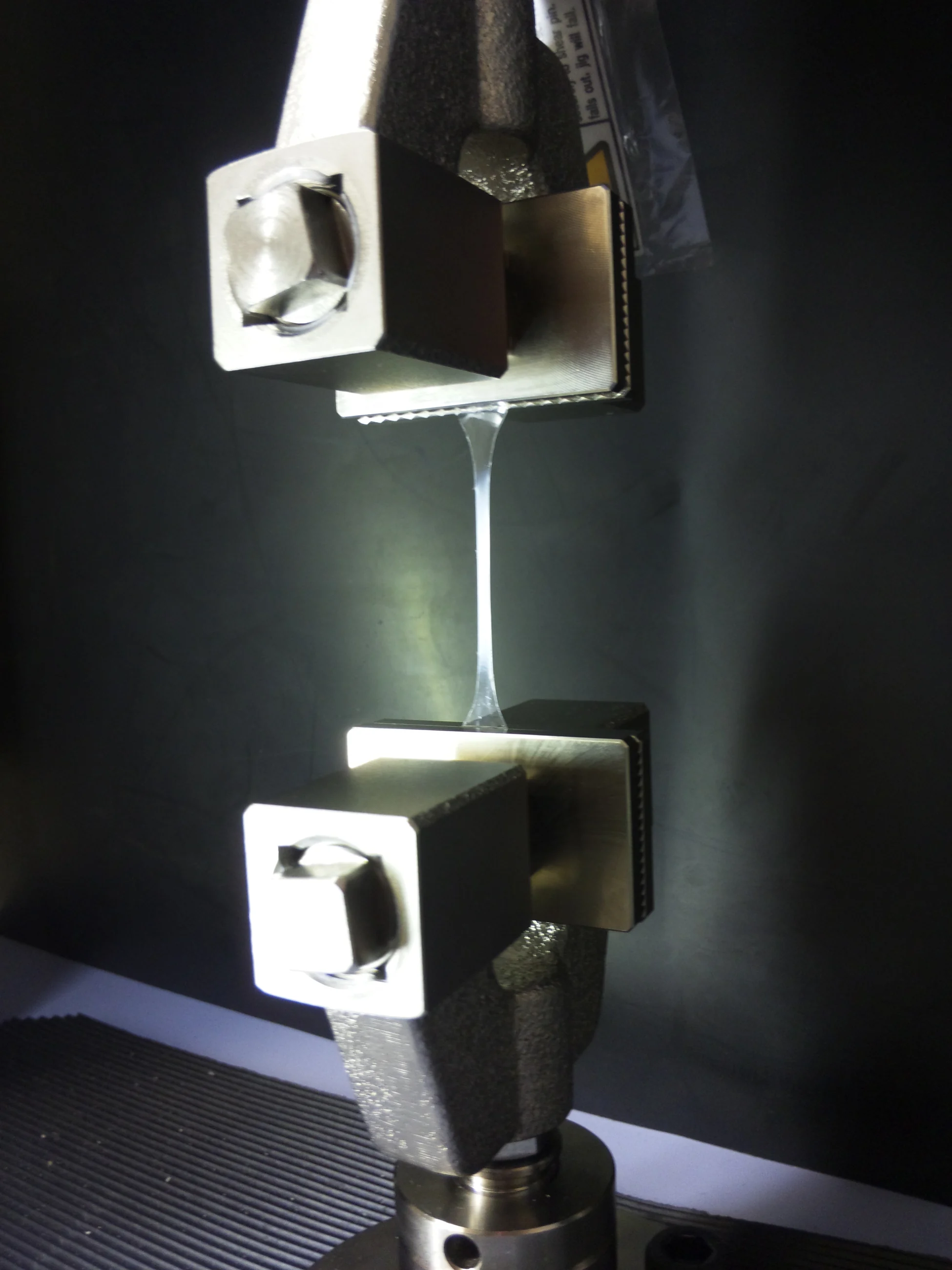
Accelerated aging is valuable because real service periods can be too long for development schedules. The acceleration, however, is only useful when the elevated exposure preserves the degradation mechanism relevant to the intended application.
Temperature, humidity, stress, chemicals, UV and other variables can interact. A test that accelerates one mechanism may omit or change another.
Define the failure criterion first
Choose the property or functional endpoint that determines unacceptable degradation: strength retention, elongation, electrical performance, color, dimensional stability or another application-specific measure.
Different properties can change at different rates, so a single aging time does not establish every aspect of material endurance.
Make the exposure representative of the mechanism
ASTM D3045 addresses thermal endurance under hot-air exposure and explicitly does not predict situations where stress, environment, temperature and time interact to control failure.
If moisture, chemicals, load or UV are part of the service mechanism, the qualification strategy must address them rather than treating oven aging as a universal surrogate.
Use Arrhenius extrapolation cautiously
Arrhenius treatment assumes the accelerated temperatures do not introduce a fundamental change in the degradation mechanism or material behavior.
Transitions, morphology changes and other physical effects at elevated temperature can compromise that assumption. Extrapolated endurance should therefore be tied to the defined endpoint and exposure model, not presented casually as service life.
Include controls and intermediate measurements
Reference material and multiple exposure intervals help reveal whether degradation is monotonic, whether an early conditioning effect is being mistaken for aging, and whether the candidate behaves differently from the approved baseline.
- Defined endpoint
- Reference material
- Multiple exposure times
- Controlled temperature and environment
- Post-exposure conditioning
- Relevant property measurements
Translate aging evidence back to the application
Use accelerated aging as one part of the evidence set. Component geometry, residual stress, assembly load and real environmental interactions may require additional testing before application durability is established.
Technical references