More testing does not automatically create a better qualification program. A long list of unrelated measurements can consume samples and time while leaving the main application risks unresolved.
A useful plan starts with the decision to be made, the credible failure modes and the evidence needed to distinguish acceptable from unacceptable performance.
Define the decision before selecting tests
State whether the program is screening candidates, qualifying a new source, validating a formulation change, investigating failure or establishing a design limit.
The same material may require very different evidence depending on the decision and consequence of error.
Map requirements to credible failure modes
For each critical requirement, identify how the part could fail and which exposure or loading condition drives that mechanism.
This prevents a convenient laboratory property from becoming a substitute for the behavior the application actually needs.
Choose tests that answer specific questions
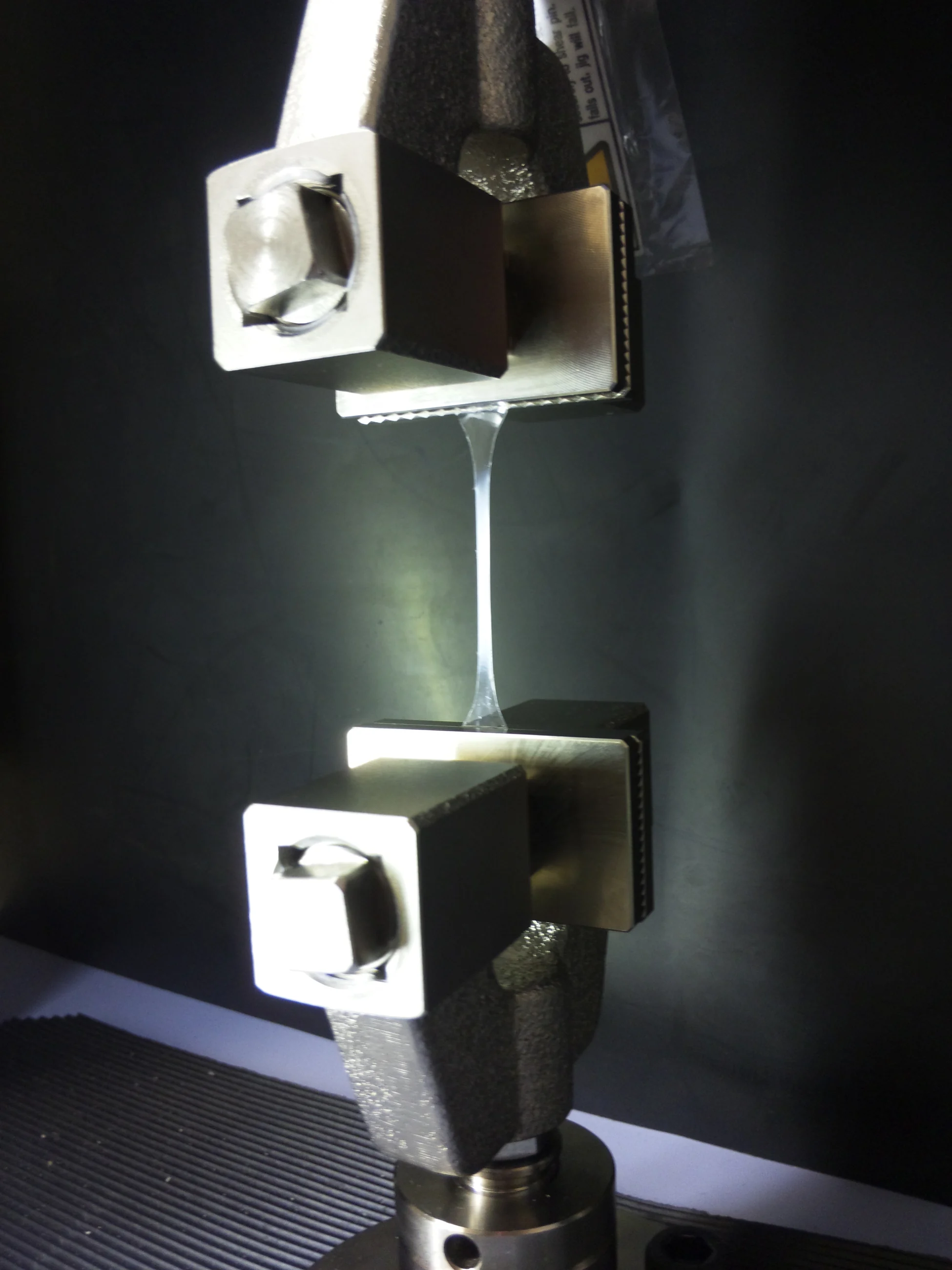
Select mechanical, thermal, electrical, chemical, rheological, aging or application-level tests because each resolves a defined uncertainty.
Specify method, specimen, conditioning, environment and acceptance basis where those details affect comparability.
- Question being answered
- Test method and specimen
- Conditioning and environment
- Reference or control
- Acceptance criterion
- Replication and variability
Use staged evidence
Screen inexpensive or fast failure modes first, then commit resources to longer or application-specific validation after unsuitable candidates have been removed.
Staging is especially useful when multiple material alternatives are being considered under time pressure.
Connect laboratory evidence to production
Laboratory testing cannot represent every interaction of geometry, tooling, assembly and service. Use representative production trials or component-level testing when those interactions control the risk.
Close the plan with traceable material lots, conditions and acceptance decisions so the evidence can support future change control.
Technical references