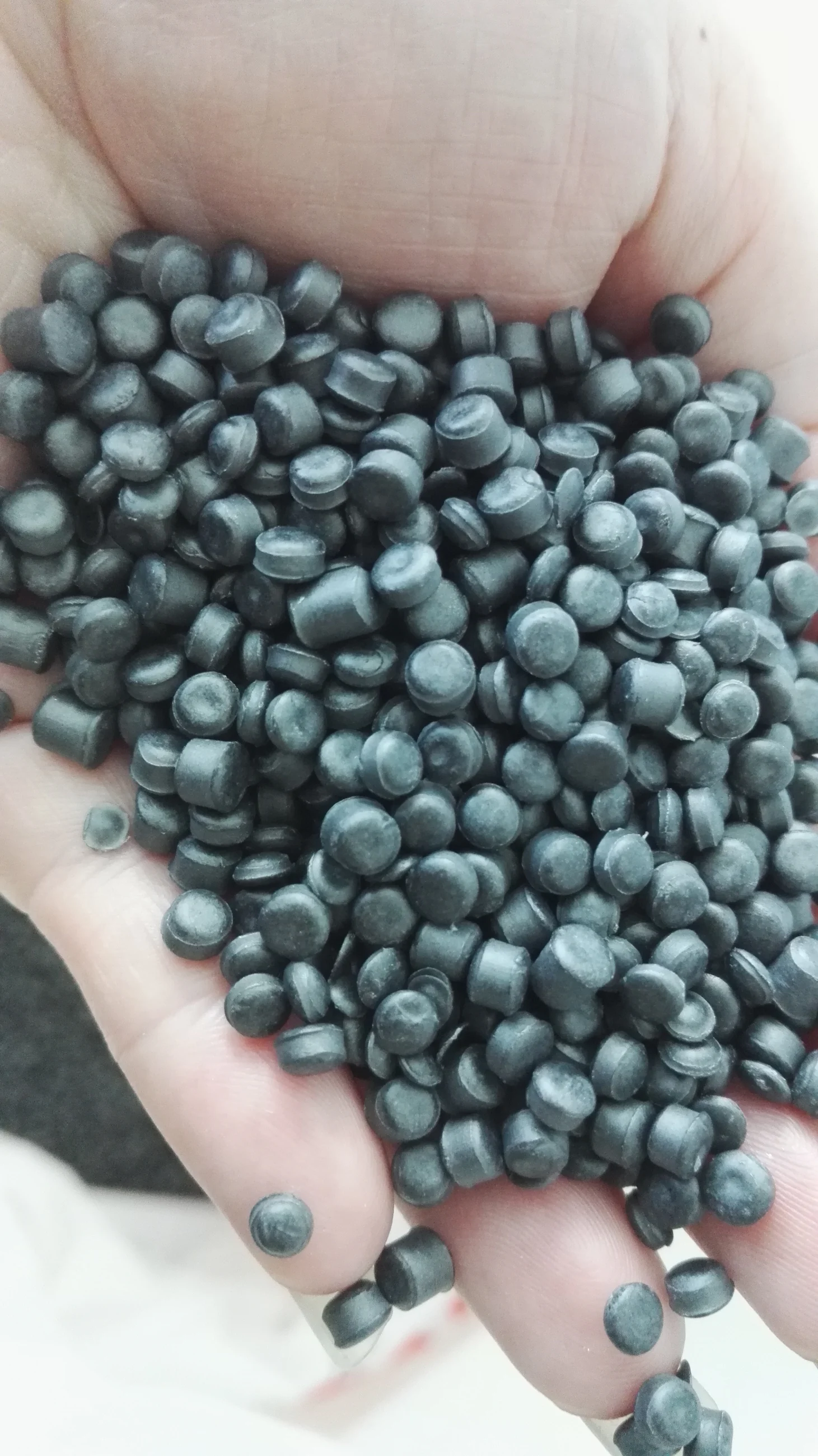
Recycled-content compounds can meet demanding applications, but the control strategy cannot simply assume the same feedstock history as virgin resin.
Incoming streams can vary in polymer composition, contamination, previous processing and additive history. The practical objective is to control the attributes that affect processing and finished-part performance.
Define the recycled-content claim and chain of custody
Clarify whether the requirement concerns post-consumer, pre-consumer or another defined source, the required percentage, and how the claim will be documented through the supply chain.
Chain-of-custody terminology and the chosen accounting model should be agreed before commercial qualification, not reconstructed after production begins.
Identify variability that can affect the process or part
Potential issues include incompatible polymers, moisture, residual chemicals, adhesives, metals, paper, glass, wood and other contaminants. ASTM guidance for recycled plastics specifically recognizes the need to identify and classify such contaminants.
The relevant controls depend on polymer family, conversion process and end-use sensitivity.
Control performance, not cosmetic sameness
Define ranges for the properties that control processing and application performance. Color, odor, appearance or minor composition variation should be controlled where they matter, but not automatically tightened beyond the functional requirement.
Use lot strategy and trend data
Qualification of one sample does not characterize ongoing variability. Establish incoming or supplier controls, sampling frequency and trend data appropriate to the consequence of variation.
For critical attributes, compare lot-to-lot distribution rather than only whether individual results pass a broad limit.
- Polymer identity and contamination
- Moisture and volatiles
- Flow or rheology
- Mechanical performance
- Color and appearance where relevant
- Traceability and recycled-content documentation
Qualify the compound in the intended process
Processing trials should evaluate stability, filtration or screen behavior where relevant, surface quality, dimensional behavior and part performance across representative material lots.
The goal is a robust operating window that accommodates controlled feedstock variability without transferring that variability into unacceptable product performance.
Technical references