
Insight
A Practical Framework for Polymer Material Substitution
Material substitution works best when the application requirement is translated into a controlled comparison of polymer, formulation, process and finished-part performance.
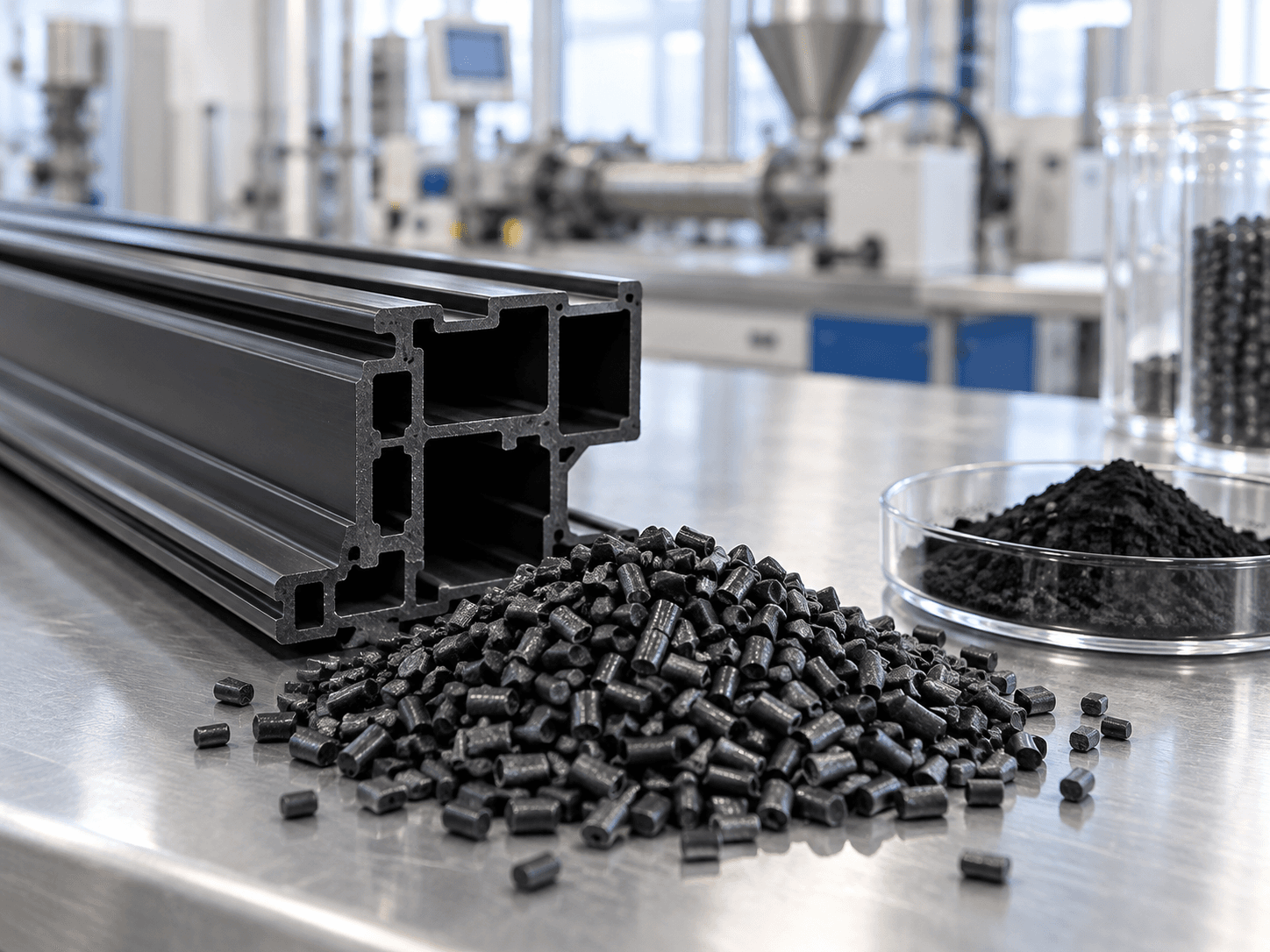
Material substitution is a broader engineering decision than an alternate-source qualification. It may change polymer family, reinforcement, additive package, process behavior, geometry response, supplier evidence and economics at once.
Decision context
The right starting point is a concise application brief: identify the finished article, its use environment, the conversion route, the current material if known, and the requirement that would make a candidate unacceptable. This keeps the discussion grounded in a decision rather than a category label.
What changes the answer
Start by identifying the reason for change and the function that must be preserved. Supply continuity, cost, sustainability, failure correction or processing improvement may require different evaluation depth and different risk controls.
Engineering and processing implications
Evaluate total risk, not price alone: tooling, drying, cycle time, scrap, assembly, downstream operations, customer approvals and long-term performance. The least-disruptive viable option is often the better business path.
Change breadth determines evidence
Changing only an approved supplier source is different from changing polymer family, reinforcement or additive package. As change breadth increases, expand the process, part, assembly and customer-approval evidence accordingly.
Economics without false savings
Evaluate scrap, cycle, tooling, drying energy, secondary operations, qualification labor and warranty risk with material cost. This produces a more credible decision than a price-per-pound comparison.
Trial and release plan
Define the comparison before samples arrive. Identify the relevant test method, specimen or finished part, condition, process settings, acceptance criterion and owner of the decision. Record lot identity and deviations. For an existing material, preserve a baseline; for a new formulation, include process capability, visual quality and downstream assembly or converting where relevant.
Questions that prevent false equivalence
- Which requirement is mandatory at release, and at what test condition?
- What does the incumbent process reveal about drying, flow, warpage, surface or scrap risk?
- Which grade-specific documents or declarations are required?
- What finished-part test would expose the consequence of a wrong choice?
- Who approves a material or process change after evidence is complete?
Related decisions
Continue with qualifying alternate material source and existing modified custom compounds. For an application-specific shortlist, use Explore Materials or Discuss a Material Requirement.
Evidence chain
For material substitution framework, organize the review around service condition, material state, part geometry and the process window. Separate what is known from a technical source, what must be confirmed for the candidate grade, and what only a representative application trial can show. This structure keeps commercial urgency from turning a preliminary screen into an unsupported conclusion.
Start with a source that describes the relevant material family or processing mechanism, then use grade-specific supplier documents for the proposed candidate. Keep the evidence chain visible: family guidance explains why a question matters; the exact commercial grade and finished-part test decide whether it is acceptable. This distinction prevents a technical article from becoming a pseudo-datasheet.
Use a short decision record after the trial: requirement, candidate identity, conditions, observed result, unresolved risk and next action. It gives purchasing, engineering, quality and operations a shared basis for moving forward or declining a candidate. It also helps a distributor connect the processor's real need with a materially appropriate compound or masterbatch without claiming manufacturer, laboratory or consulting capability.
Implementation note
For material substitution framework, do not treat a first satisfactory sample as the end of the decision. Confirm that the result is repeatable at the intended operating conditions and that the documentation follows the material through approval. If a critical requirement changes, reopen the review rather than assuming the original result transfers unchanged.
Decision record
A practical material substitution framework review records the candidate identifier, source documents, material condition, process settings, test method, result, exception and release owner. This small record is valuable when results must be compared across lots, facilities or later revisions. It also separates an application observation from a broad claim about a polymer family.
When the evidence is incomplete, describe the open question plainly. That is preferable to filling the gap with an assumed compatibility, approval or performance statement. The next trial can then be designed to resolve a specific uncertainty.
Technical boundary
This guide is category-level education, not a grade specification. Polymer behavior varies by commercial grade, formulation, reinforcement, additives, conditioning, processing history, test method, geometry and end use. Confirm the proposed supplier grade and validate the representative application.